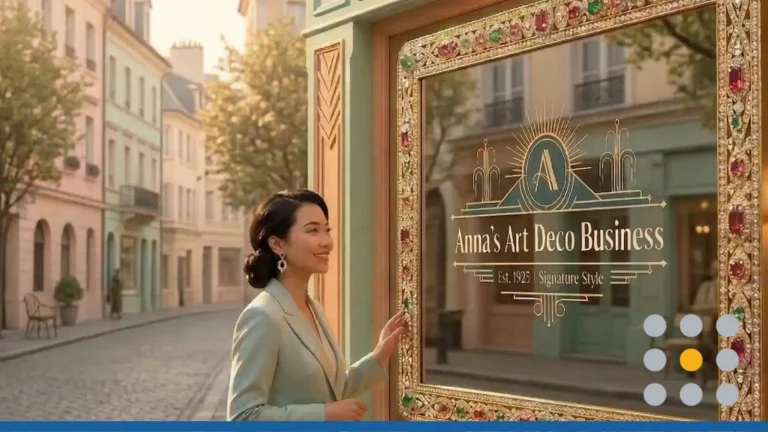
Rebranding your business is one of the most powerful ways to reset how customers see you, attract better-fit clients, and set yourself up for your next stage of growth. Done well, it can turn a “tired but familiar” brand into a fresh, confident presence across your logo, website, and even what you put on a business card or social profile.
Before you start, evaluate your current brand to understand its strengths, weaknesses, and how your audience perceives it. A successful rebranding process involves structured planning, careful implementation, and efficient management of changes to achieve your goals.
Done poorly, it can confuse loyal customers, lead to unexpected rebranding costs, and cost serious money, fast, without delivering the new image your business needs to stay relevant.
Let’s start rebranding your business!
- Is Your Current Logo Holding You Back?
- 12 Critical Signs It’s Time to Refresh or Rebrand
- Logo Rebrand & Full Rebranding: 6-Phase Process
- Case Studies: Logo Refresh vs. Logo Rebrand
- Common Mistakes: How NOT to Refresh or Rebrand
- Timeline and Budget Planning
- Measuring Success: Logo Refresh & Rebranding ROI
- DIY vs. Professional: When to Use FreeLogoServices
Is Your Current Logo Holding You Back?
If you feel embarrassed handing out your business card, your logo is already costing you opportunities. Maybe it looks dated next to newer competitors, doesn’t work well on mobile, or doesn’t match the professional image you’re trying to project online and offline.
Many business owners get stuck because the terms are confusing:
- Logo refresh: Adjusting fonts, colors, and details while keeping the core logo recognizable.
- Logo rebrand: Creating a substantially new logo to support a new direction, audience, or positioning.
- Full rebranding of your business: A deeper shift that affects your visual identity, messaging, positioning, and sometimes even your business model.
Visuals may also feel outdated because of shifting market trends, which can make your brand appear out of touch or less competitive.
Quick Self-Assessment
If you answer “yes” to several of these, you likely need to act:
- Does your logo break or become unreadable on social media, mobile screens, or small formats like favicons or business cards?
- Have your offerings, audience, or price point changed, but your brand still talks to the “old” market?
- Are you getting lost in a sea of competitors who all look and sound the same?
As you read, keep your own brand in mind, and think about everywhere your identity shows up: your storefront, your social headers, your email signature, and what goes on a business card you confidently hand to a potential customer.
To make the best decisions when rebranding your business, be sure to seek honest feedback and customer feedback from your existing customer base and target market. Their insights can help you refine your brand and make sure your rebrand resonates with the right audience.

12 Critical Signs It’s Time to Refresh or Rebrand
This section walks through the 12 key signals that help you decide whether a logo refresh, logo rebrand, or full “rebranding a business” effort is right for you. As you assess your situation, it’s important to review your company identity to determine if it still reflects your values, connects with your customers, and positions your company effectively in the market.
- Has your business outgrown its current look or messaging?
- Are you entering new markets or launching new products?
- Has your target audience changed?
- Are you merging with another company or acquiring new businesses?
- Is your visual identity inconsistent across platforms?
- Are you struggling to stand out from competitors?
- Has your reputation shifted, for better or worse?
- Are you facing negative associations with your current brand?
- Is your current brand strategy still supporting your business goals, or does it need to be updated to reflect your company’s growth and evolving needs?
- Are you planning a major shift in your business model?
- Do you want to signal a new era or direction for your company?
- Are you experiencing declining engagement or sales?
If you answered yes to any of these, it might be time to consider rebranding your business.
When You Need a Logo Refresh
These situations call for an evolution, not a revolution.
- Your logo looks dated, but brand recognition is strong: If customers recognize your logo instantly and it performs well on signage, invoices, and business cards, you probably don’t want a total change. Instead, think about subtle refinements that modernize the look: cleaner fonts, a simpler shape, or a more vibrant color palette.
- Design trends have evolved (flat, minimal, digital-first): Logos that looked cutting-edge 10–15 years ago often feel heavy in today’s flat, minimal design environment. Instagram’s 2016 move from a detailed camera icon to a bold, flat gradient mark is a classic example of a refresh driven by digital trends.
- Your colors feel dull or outdated: Muted, muddy colors that looked “serious” in print can feel lifeless on modern screens. A refresh might involve brightening your existing colors, improving contrast for readability, and checking how they show up on mobile apps, websites, and printed business cards.
- Your logo is too complex for digital use: Highly detailed logos with tiny lines, gradients, or intricate crests often break down at small sizes. If your logo looks great on a storefront but turns into a blob as a social media avatar or on what goes on a business card, it is a strong sign to simplify.
When You Need a Logo Rebrand
Here, your logo needs more than a tune-up. Sometimes, incremental updates aren’t enough, and a complete rebrand is necessary to overhaul your company’s visual identity, including your logo, color palette, and branding elements. This comprehensive approach can modernize your brand and attract new audiences.
- Major strategic business pivot: If your product line, technology, or market focus has changed dramatically, your logo should reflect that new reality. Jaguar’s ongoing shift toward electric vehicles and more modern styling illustrates how a visual identity must evolve to match a new strategic story.
- Merger or acquisition: When two businesses combine, you often need a new identity that represents the shared future rather than either legacy brand alone.
- Negative brand associations: If your existing logo is tied to controversies, poor reviews, or a period of underperformance, updating it can help you create distance and rebuild trust. The key is to pair the visual change with real improvements in service, quality, or values—otherwise it feels like cosmetics only.
When You Need Full Business Rebranding
At this level, you are not just changing how you look; you are redefining what you stand for. A successful full rebrand requires a clear rebranding strategy and strong creative direction to guide every aspect of your new brand identity, from visuals to messaging, and to make sure your audience perceives your business as intended.
If you’ve shifted from B2B to B2C (or vice versa), moved from local to national, or changed your core revenue model, a full rebrand is usually needed. Tupperware’s recent “Useful is Beautiful” strategy and accompanying identity shift show how a legacy brand can reposition itself for modern relevance.
You may be ready for full small business rebranding if:
- Your target audience has fundamentally changed (for example, moving from Boomers to Gen Z).
- You are repositioning from budget to premium or vice versa.
- You can no longer explain what makes you unique in a sentence.
Logo Rebrand & Full Rebranding: 6-Phase Process
If you are changing more than styling, like your positioning, audience, or business model, you need a structured rebrand process. The 6-phase rebrand process outlined below works for both a logo rebrand and broader “rebranding your business” projects.
Phase 1: Discovery & Research (2–4 Weeks)
This is about understanding your current state and market context:
- Brand audit: review your logo, website, marketing, and what to put on a business card today to see how you’re presenting yourself.
- Customer insights: talk to clients about why they choose you, what they value, and how they’d describe you to a friend.
- Analyze brand sentiment: assess how your audience perceives your brand by gathering customer feedback, using social listening tools, and monitoring market response to understand the impact of rebranding on your image.
- Audience profiling: research to develop detailed buyer personas, helping you tailor your rebranding strategy to your target market.
- Competitive review: collect competitor logos, taglines, and websites to identify patterns and opportunities to stand out. Market and competitive analysis also helps identify white space opportunities for differentiation.
- Internal workshops: align owners, leaders, and key stakeholders on what’s working and what must change.
Phase 2: Rebranding Strategy Development (3–4 Weeks)
Here you define the story behind your new identity:
- Positioning: clarify the core idea that separates you from competitors and highlights your competitive differentiation, which can enhance perceived value and allow you to command premium pricing.
- Target audience: document key segments, pain points, and expectations around look and feel to make sure your rebranding strategy resonates with your target market.
- Brand personality: decide whether you want to feel more modern, approachable, premium, playful, or authoritative.
- Messaging foundations: write a concise brand promise and 2–3 supporting messages that guide future copy.
Phase 3: Creative Development – Logo Rebrand Design (4–8 Weeks)
With strategy in place, design work begins:
- Concept exploration: designers or tools like FreeLogoServices create multiple directions (conservative, moderate, bold).
- Systems thinking: along with the logo, define color palette, typography, icon style, and imagery approach.
- Establish creative direction and integrate new brand elements: set a clear vision for the visual and conceptual aspects of your rebrand, and update all assets, visuals, and messaging to reflect your refreshed identity.
- Real-world mockups: see each option on your website, signage, packaging, and business card layouts to judge practicality.
Phase 4: Testing Your Rebrand Concepts (2–3 Weeks)
Testing reduces risk and helps you avoid “Gap-level” backlash.
- Internal feedback: gather reactions from employees and key partners; they often spot practical issues early. Internal alignment and internal buy-in are indispensable; employees need to be on board to embody and communicate your new brand effectively.
- Customer input: run small surveys or interviews with trusted customers to gauge initial reactions.
- Soft launches: quietly test new branding on a landing page, ad set, or limited product line before a full rollout.
- Adjustments: refine confusing or polarizing elements while keeping the core direction intact.
Phase 5: Implementation – Rolling Out Small Business Rebranding (3–6 Months)
Implementation is where many projects stall, especially for small businesses. Create a simple checklist and schedule:
- Rebrand internally: develop a detailed plan for rolling out the rebrand within your organization, align internal stakeholders, and update all brand materials to maintain consistency.
- Visual identity kit: finalize logo files, color codes, fonts, and usage guidelines.
- Priority channels: update your website, social profiles, and digital ads first.
- Physical materials: phase in new signage, packaging, uniforms, and what to include on a business card for your team.
- Brand style guide: create a brand style guide and establish new brand guidelines to document how your brand should look and sound across all media.
- Communication plan: explain the “why” behind your rebrand in a blog post, email, and social posts to bring customers along.
- Existing customer base: communicate changes clearly to your existing customer base to re-engage current customers and maintain brand relevance.
Phase 6: Measuring Rebranding Success (Ongoing)
Rebranding a business is an investment, so you need clear ways to track ROI. A hallmark of successful rebranding is aligning your brand’s identity with customer expectations, market trends, and business goals, which leads to positive long-term outcomes. Managing your brand image is also imperative, as it shapes how your audience perceives your business and influences ongoing brand management decisions.
- Brand metrics: awareness, recognition, and favorability from surveys and social listening. After launching your rebrand, look for a short-term spike in brand awareness, such as an increase in branded search or direct visits to your website.
- Marketing performance: changes in website traffic, ad click-through rates, and lead conversion after launch.
- Sales & retention: monitor revenue, average order value, and repeat purchases over the next 6–18 months.
- Operational metrics: check how smoothly teams use the new brand (fewer ad hoc logo tweaks are a good sign).
- Conduct a brand audit every six months to assess audience perception and brand messaging.
Case Studies: Logo Refresh vs. Logo Rebrand
Real examples help clarify what level of change you may need. A company rebrand can be a strategic move that leads to massive success when executed thoughtfully, but it can also present challenges if not aligned with your audience or business goals.
Here are some notable case studies of company rebrands and their outcomes:
- United and Continental Airlines: Merged and rebranded, combining elements of both brand identities. This helped create a unified presence and streamline operations, though it required careful management of customer expectations.
- Dunkin’: Dropped ‘Donuts’ from its name to modernize its image and focus on coffee. This rebrand helped Dunkin’ appeal to a broader audience and emphasize its beverage offerings.
- Wise (formerly TransferWise): Rebranded from TransferWise to Wise to reflect its expanded services beyond money transfers. This led to growth in product offerings and a stronger market presence.
These examples show that a company rebrand can drive massive success when it aligns with business strategy and customer expectations, but it also carries risks if not carefully planned.
Successful Logo Refreshes
- Instagram (2016): Instagram moved from a realistic camera icon to a simplified, flat gradient mark designed for mobile screens and modern app stores. The camera shape and colorful spirit remained, but the look became bolder and more scalable, supporting its evolution from a niche photo app to a mainstream social platform.
- Starbucks (2011): Starbucks removed the word “coffee” and outer ring from its logo, enlarging the siren to create a text-free, globally recognizable mark. The refreshed logo improved versatility on packaging and digital channels while signaling a broader lifestyle experience beyond coffee.
- Google (2015): Google kept its familiar color pattern but switched from a serif wordmark to a modern, geometric sans-serif typeface for better digital rendering. This typography refresh made the logo more legible on small screens and across a growing range of products and interfaces.
Bold Logo Rebrands
A bold logo rebrand can redefine your business identity and create a new image that resonates with your target audience. By updating visual identity elements like logos and design, companies can alter public perception and signal growth or market relevance.
- Tupperware (2020s repositioning): Tupperware has worked to move from “old-school containers” to a modern, design-led lifestyle brand, supported by updated visual identity and messaging. This more dynamic expression aims to reconnect with younger audiences and reinforce the brand’s usefulness and style.
- Burberry (heritage return): Burberry’s shift to a minimal sans-serif logo and then return to a more heritage-inspired serif identity demonstrates that sometimes “rebranding” means going back to your roots in a more confident way. It also shows that visual identity should follow strategy and customer expectations, not just trends.
Small Business Rebranding Stories
For small businesses, rebranding often looks like:
- A local service company expanding regionally and updating its logo and website to look credible in multiple markets, guided by a cohesive brand strategy that reflects both company growth and evolving market trends.
- A traditional retailer adopting e‑commerce and modernizing its branding to compete with online-first competitors, staying ahead of market trends to remain relevant and competitive.
- A family-owned business passing to the next generation, updating the brand to reflect new offerings while honoring the original name and reputation, and using a strong brand strategy to connect with new and existing customers.
Common Mistakes: How NOT to Refresh or Rebrand
Even big brands get it wrong, which is good news; it means you can learn from these common rebranding mistakes.
Logo Refresh Mistakes
- Changing too much: if you remove all recognizable elements, you risk breaking the connection loyal customers have with your brand.
- Chasing trends: designs that feel hyper-current today can feel dated in a few years, especially on printed materials and business cards that you keep longer.
- Ignoring customer attachment: even if your logo looks “old” to you, customers may feel emotionally tied to it; surprise changes can backfire.
- Poor quality execution: low-resolution files, inconsistent spacing, or misaligned versions across platforms weaken trust.
Timeline and Budget Planning
Planning helps you avoid rushed decisions and overspending. It’s important to plan for rebranding costs, as these can vary widely depending on whether you’re making small changes like a logo redesign or undertaking a full brand overhaul.
Logo Refresh
For a small business:
- Timeline: roughly 6–12 weeks from audit to rollout, depending on approvals and production needs.
- Budget: often ranges from a few hundred to a few thousand dollars if you use logo makers, templates, or a freelance designer.
Logo Rebrand
For a more substantial rebrand:
- Small business: about 3–6 months and a mid‑four- to low‑five-figure budget depending on scope (logo, website, messaging, collateral).
- Mid-size business: 6–9 months and higher costs due to more stakeholders, channels, and implementation complexity.
Full Business Rebranding
For complete “rebranding your business”:
- Timeline: often 6–12+ months, especially if you coordinate with product, culture, or operational changes.
- Budget: higher investments, but costs can be staged across phases (strategy, design, rollout) to manage cash flow.
Measuring Success: Logo Refresh & Rebranding ROI
To prove value, tie your project to measurable results.
Brand & Marketing Metrics
Track before-and-after indicators like:
- Brand awareness and recall: survey customers or use brand lift studies in digital campaigns.
- Perception shifts: ask if your brand feels more modern, trustworthy, or premium after the rebrand.
- Engagement: follow social media interactions, email open rates, and content performance.
Performance & Financial Metrics
Connect branding to business outcomes:
- Website: changes in traffic, time on site, and conversion rates after new branding launches.
- Sales: shifts in revenue, average order value, and conversion rates from key channels.
- Customer retention: repeat purchase rates and referral volume as the brand becomes clearer and more compelling.
Remember that rebranding ROI often appears over months, not days; pair short-term marketing metrics with long-term brand and revenue trends.
DIY vs. Professional: When to Use FreeLogoServices
Most small businesses can mix DIY tools and professional help.
Ideal Uses for FreeLogoServices
- Logo refresh projects with a clear direction and limited scope.
- Budget-conscious small business rebranding, where you want to test ideas before hiring an agency.
- Fast turnarounds, such as launching a side business or validating a new offering.
- Exploring how different logo options look on key touchpoints, including what to put on a business card for small business marketing.
When to Hire Professionals
- Complex rebranding involving multiple brands, locations, or stakeholders.
- Unclear positioning or messaging that needs strategic work before design.
- High-stakes launches tied to funding rounds, acquisitions, or national campaigns.
Best of Both Worlds
A practical path:
- Use FreeLogoServices to experiment with logo directions and narrow down what feels right.
- Test finalist options with customers and in small campaigns.
- Partner with a professional designer or agency to refine the winning concept into a complete brand system if needed.
This hybrid approach keeps costs manageable while improving quality and confidence.

Conclusion
Rebranding your business is about aligning your appearance and communication with who you truly are and where you are going. Whether you only need a logo refresh, a full logo rebrand, or a complete small business rebranding, what matters most is clarity of strategy, thoughtful execution, and consistency across every touchpoint, from your website to what goes on a business card you are proud to hand out.
With the right plan, tools like FreeLogoServices, and a focus on measurable outcomes, your next brand evolution can help you stand out, attract better-fit customers, and support your long-term growth.
FREQUENTLY ASKED QUESTIONS
What’s the difference between a logo refresh and a logo rebrand?
A logo refresh keeps the core recognizable elements, such as icon shape or colors, but updates styling through cleaner fonts, simplified shapes, or modernized colors. A logo rebrand changes the logo more dramatically to reflect a new direction, audience, or positioning, often paired with broader messaging and identity changes.
How do I know if I should refresh my logo or completely rebrand my business?
If your business model, audience, and offerings are mostly the same but your visuals feel outdated, a refresh is usually enough. If you have changed who you serve, what you sell, or how you compete, and your brand story no longer fits, a full rebrand of your logo and business is more appropriate.
How much does it cost to refresh a logo vs. rebrand a logo?
A logo refresh for a small business can often be done for a few hundred to a few thousand dollars using DIY tools and affordable designers. A more extensive logo rebrand with professional strategy, design exploration, and implementation support usually ranges higher due to the additional time and expertise involved.
How long does rebranding a business take for a small business?
A lighter brand update or logo refresh may take 6–12 weeks from audit to full rollout. A complete small business rebranding, covering strategy, logo, messaging, and key touchpoints, often runs 3–6 months, depending on scope and team capacity.
Can I refresh my logo myself, or do I need a designer?
Many small businesses successfully refresh their logos using online logo makers and templates, especially when changes are modest. If you need a stronger strategic shift or a custom, highly differentiated mark, working with a professional designer or agency can be worth the investment.
Will my customers be upset if I rebrand my logo?
Some customers will always prefer the old version, but clear communication and thoughtful design can ease the transition. Share why you are changing, show respect for your history, and highlight how the new brand helps you serve customers better.
What’s the ROI of rebranding your business?
Rebranding ROI typically shows up in improved brand perception, higher engagement, and better marketing performance that collectively support revenue growth. While it’s rarely possible to attribute every dollar directly to a new logo.
Should I refresh my logo now or wait for a full rebrand later?
If your current logo is actively hurting trust or usability, hard to read, inconsistent, or unprofessional, it is usually better to make at least a modest refresh now. If you know a major strategic shift is coming within the next year, you may choose to limit changes to small fixes and plan a more comprehensive rebrand alongside that shift.
How often should a small business refresh or rebrand its logo?
Most small businesses benefit from a logo refresh every 5–10 years to keep pace with design trends and technology. Full-scale rebranding of your business is less frequent, often driven by major strategic changes rather than a fixed timeline.
What are the risks of rebranding a small business logo?
Key risks include confusing loyal customers, losing brand recognition, and spending time and money on changes that do not support a clear strategy. You can reduce these risks by testing concepts, communicating openly, preserving strong equity elements, and rolling out changes carefully.