The Coca‑Cola logo history is an example of how a simple, consistent wordmark can last over 130 years without looking stuck in the past. It’s changed far less than most people think. Yet, the company has still managed to stay current on everything from painted signs to social media campaigns.
In this article, you’ll learn about the Coca-Cola logo evolution. You can then turn that knowledge into practical steps you can use with an AI logo maker. Your business, merchandise, and website will flourish with your new insight.
CONTENTS TABLE
- Why the History of the Coca‑Cola Logo Matters
- Origins of Early Wordmarks and Spencerian Script: 1886 to 1893
- Coca-Cola Logo History: 1890 Art Nouveau Experiment and Return to Script
- Refinement, Red Color, and Early Applications: 1890s to 1940
- Coca-Cola Logo Evolution: 1941 to 1960s
- Dynamic Ribbon Device and the Modern Era: 1969
- The Future and the Coca-Cola Logo Meaning
- Key Branding Lessons From the Coca-Cola Logo Evolution
- How to Apply These Principles With an AI Logo Maker
- Extending Your Logo to Merchandise and Your Website
- Clear Next Steps: From Inspiration to Execution
Why the History of the Coca‑Cola Logo Matters
The history of the Coca‑Cola logo is a crash course in long‑term branding strategy. The flowing script logo from the late 1800s still feels familiar on deliveries, vending machines, and digital ads.
If you’re thinking about creating your own logo today, especially with AI tools, this story shows why consistency beats constant reinvention every time.
So, here’s the plan for this guide:
- A straightforward timeline of the Coca-Cola logo history, from the first serif wordmark to the famous dynamic ribbon.
- Practical branding lessons you can use when generating your own logo. There will be information on: setting colors, and rolling that identity across merchandise and your site.
Along the way, you’ll see how adjustments in typography, color, and containers shaped a logo that can live almost anywhere.
Origins of Early Wordmarks and Spencerian Script: 1886 to 1893
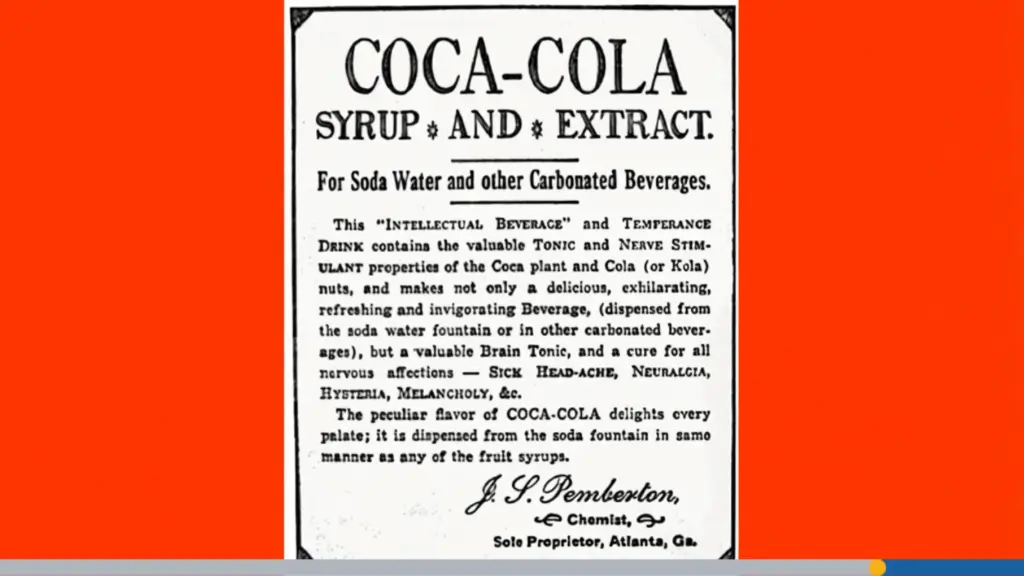
The First 1886 Serif Wordmark
The Coca‑Cola logo history began in 1886. The first advertisements used an all‑caps serif wordmark. It had a more straightforward newspaper heading appearance than a polished brand signature.
The logo worked functionally, but it didn’t yet carry the personality people now associate with the drink. It said Coca‑Cola, but it didn’t really feel like Coca‑Cola.
Frank Mason Robinson and Spencerian Script (1887 to 1891)
Everything changed when Frank Mason Robinson, the company’s bookkeeper and early marketing mind, suggested the name Coca‑Cola. To cap it off, he also wrote it in Spencerian script. Spencerian was the formal handwriting style of the era, characterized by flowing curves and connected letters, used by clerks and bookkeepers.
Robinson understood that the double C and the Spencerian script style would stand out in advertisements and signage. From 1887 onward, early script versions of the logo started appearing in ads, even before every detail was standardized. With Robinson’s input, the Coca-Cola logo evolution had begun to fizz.
1893 Trademark and TRADE MARK Inside the C
By 1893, the company secured a formal trademark for the script logo, which had already appeared in slightly different forms. After registration, the trade mark or trade mark registered often appeared with the logo, sometimes tucked into the tail or curve of the first C.
The trade mark helped legally protect the design. It also signaled that the script itself was now treated as a valuable asset. For a modern business owner, this is the shift from a nice font to a recognizable, protected signature. It was a cutting-edge aesthetic long before the days of Artificial Intelligence (AI).
FreeLogoServices helps you harness cutting-edge AI while preserving an authentic, human brand identity. Its AI-Powered logo maker is intuitive and beginner-friendly. So, you can create professional designs without graphic design experience.
“In a certain sense, the logo design process should be viewed as sculpting.” [1]
George Bokhua, Principles of Logo Design, 2022.
Coca-Cola Logo History: 1890 Art Nouveau Experiment and Return to Script
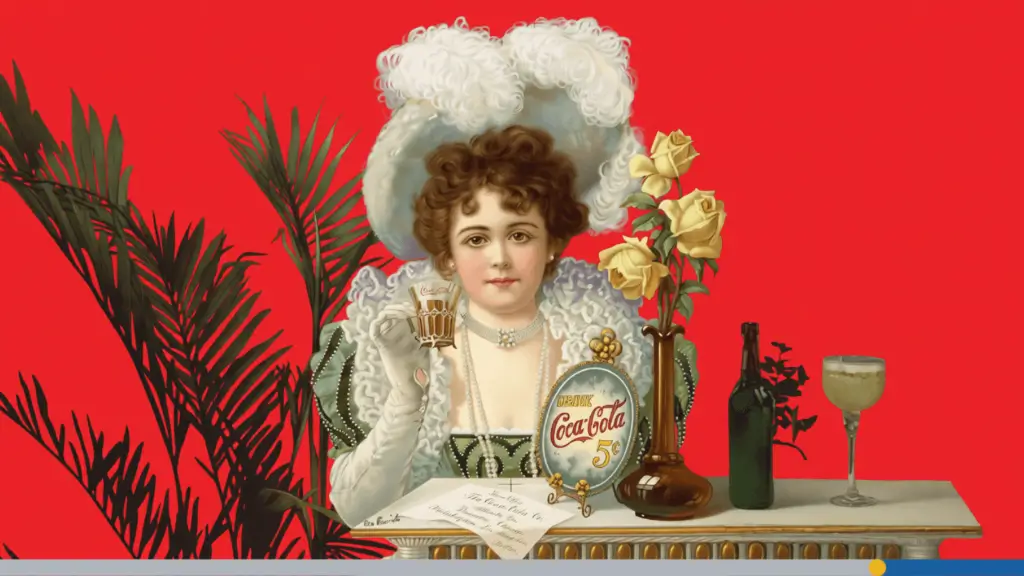
The Decorative 1890 Calendar Logo
In 1890, Coca‑Cola experimented with an Art Nouveau-style logo for a calendar design. The letters were more ornamental, with extra curves and flourishes that responded to graphic trends of the moment.
The visual style grabbed attention and had a very different energy from the disciplined Spencerian script. However, it didn’t look much like the script that was beginning to anchor the brand’s identity.
Why the Brand Reverted Quickly
That overly decorative logo seems to have been used only briefly. It appeared mainly on the aforementioned calendar, before the company returned to the familiar script.
The history of the Coca-Cola logo is a reminder that trendy doesn’t always mean strategically sound, especially when customers are learning to recognize your name visually.
Branding Lesson: Experiment Without Losing Recognition
The takeaway here is simple: Experiment around your logo, not over it. Temporary visuals, special editions, or campaign graphics can expand your style without confusing people about your main mark.
As you generate options with an AI logo maker, keep your main wordmark stable while exploring variations around layout, imagery, or seasonal elements.
Refinement, Red Color, and Early Applications: 1890s to 1940
Script Refinement and Improved Legibility
From the 1890s through roughly 1940, the changes were less dramatic and more about refinement. The script gradually became more even and balanced, with smoother curves and better spacing. These adjustments made the logo easier to reproduce across different print methods and sizes.
Early Use of Red on White in the Coca-Cola Logo Evolution
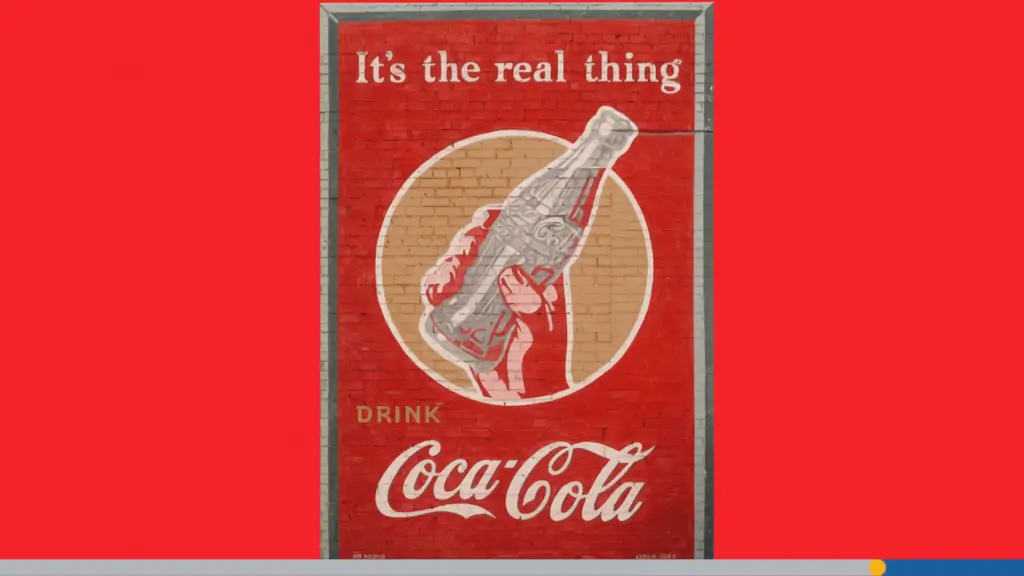
During this period, Coca‑Cola leaned heavily into its now‑famous red‑and‑white color system. Red backgrounds with white script showed up on signs, packaging, and promotional materials.
The bold red provided visibility and energy, while the white script stood out cleanly against it. Even when minor details varied, the combination of Spencerian script and strong red made the brand instantly recognizable.
Gradual Standardization of Script and Colors
Standardization didn’t happen quickly. It arrived through consistent decisions. The company repeatedly used similar shades of red and the same core script, tightening the mark’s appearance across applications.
Over time, the image repetition trained audiences to associate that specific red, flowing wordmark with the Coca‑Cola experience. When you use an AI logo maker, you’re making a similar long‑term bet. You choose typography and colors that you can live with across hundreds of uses.
FreeLogoServices’ AI-Powered logo assistant makes it easy to explore endless creative ideas and design a logo you love. Once your logo is ready, you can use FreeLogoServices’ built-in marketing tools. You can print your new logo on business cards, promotional products, branded merchandise, and more.
Coca-Cola Logo Evolution: 1941 to 1960s
Standardization and Brand Containers
By 1941, Coca‑Cola’s script had reached a form most people would recognize as the classic logo.
1941 Script Refinements and Diagonal Slant
In 1941, designers cleaned up some flourishes, adjusted the diagonal slant, and balanced letter weights. These changes made legibility better and consistent across signage, bottling, and print campaigns.
The logo became easier to standardize, which is a high priority when you’re scaling worldwide.
Trademark Moving Outside the Logo
Around this time, the placement of trademark notices also evolved. Rather than sitting inside letterforms, legal marks began appearing outside the script. This action kept the logo visually clean. This approach reinforced the script as a pure visual mark while protecting it legally.
For your own brand, it’s a reminder that small production details can affect how professional your logo appears. Please remember to be patient. The Coca-Cola logo evolution took a few attempts to get right.
Red Discs, Buttons, and the 1958 Fishtail/Arciform Shape
A big development in the 1940s and 1950s was the appearance of brand containers. Coca‑Cola used red discs or buttons that carried the white script as a unified badge across outdoor signs and vending machines.
In 1958, the company introduced the arciform or fishtail panel, a stretched, curved red shape framing the script. These devices allowed the logo to stay consistent while the surrounding shapes adapted to different formats and layouts.
Dynamic Ribbon Device and the Modern Era: 1969
Arden Square and the White Wave
By the late 1960s, Coca‑Cola had its main ingredients:
- Script.
- Red.
- Bottle.
The challenge was coordinating those elements across a growing range of packaging, signage, and advertising formats. In 1969, the company introduced the Arden Square system, pairing the script with Helvetica and a strong red block. This design also debuted the Dynamic Ribbon Device. It was a vibrant white wave that curved across the red field.

How the Ribbon Unified Packaging and Advertising
The dynamic ribbon suggested movement and fluidity while echoing the curves of the iconic glass bottle. The ribbon and red field provided structure, so the script sat consistently in layouts from cans to billboards. The Enjoy Coca‑Cola lockup standardized how the logo appeared alongside supporting typography.
The Future and the Coca-Cola Logo Meaning
3D Ribbon Experiments (2003) and the Current Cleaner Version
From the 1980s onward, Coca‑Cola kept the script and ribbon but updated its treatment. In 2003, designers pushed toward more dimensional, glossy, and gradient versions of the ribbon.
More recent versions have returned to a cleaner, flatter aesthetic that feels more contemporary and digital‑friendly. Across those shifts, the underlying Coca-Cola logo meaning stayed rooted in the same script and color system, giving the brand continuous recognition.
“Over time, a trend-driven or poorly crafted logo will show its age.” [2]
Allan Peters, Logos that Last, 2023.
Key Branding Lessons From the Coca-Cola Logo Evolution
Now that you’ve followed the timeline, this is where it becomes something you can use when creating your own logo.
Consistency With Evolution, Not Reinvention
Coca‑Cola proves you can keep the same core logo for generations while updating details. The company did not repeatedly scrap the script and start over when trends changed. Instead, it made small refinements:
- Cleaner curves.
- Better proportions.
- Smarter layouts.
Treat your logo the same way: as something you’ll evolve gradually rather than replace every few years.
Distinctive Typography as the Main Anchor
The Spencerian script is arguably the strongest single component of Coca‑Cola’s identity. It’s specific, memorable, and hard to confuse with generic fonts. When using an AI logo maker, focus on a distinctive wordmark:
- Custom letterforms.
- A script with a character.
- A clean geometric style that fits your brand personality.
That wordmark should be strong enough to appear alone on packaging, merch, and banners.
Strong, Limited Color System
Coca‑Cola’s red‑and‑white palette is simple, bold, and incredibly flexible. The brand doesn’t rely on a long list of colors to stand out. Instead, red dominates backgrounds and accents while white keeps the script legible and iconic. For your business: A small, disciplined palette often works better than constantly changing shades.
Supporting Devices and Containers
Discs, buttons, fishtail panels, and the dynamic ribbon all act as supporting devices. They give designers playful tools that don’t interfere with the core logo. When considering the Coca-Cola logo meaning, ask how a simple logo can best represent your product or service.
You can borrow that idea by using simple shapes, lines, or background panels alongside your wordmark. Those elements help unify everything from social posts to packaging while keeping your logo untouched.
Protection and Usage Rules
Coca‑Cola’s focus on trademarks and usage guidelines helped keep the logo stable worldwide. Clear rules about spacing, backgrounds, and minimum sizes prevent the mark from being distorted or weakened.
Even as a smaller business, you can create basic rules for how your AI‑Generated logo should appear. That structure turns a single file into a consistent branding system. You can also consider more in-depth research, such as the history of the Coca-Cola logo, for inspiration.
“Among typical techniques currently used in logo design are mirror imaging, duplication and cropping.” [3]
R. Roger Remington, Logo Modernism, 2015.
How to Apply These Principles With an AI Logo Maker
Let’s turn those lessons into a practical flow you can follow using an AI logo maker.
Step 1: Define Brand Personality and Style
Start with a short, simple description of your brand personality. Are you playful, premium, minimalist, traditional, or bold and energetic? Next, decide whether your main logo should lean toward script, geometric, or a clean sans‑serif wordmark. This is your version of choosing Spencerian script as the core of your identity.
Step 2: Generate a Wordmark Plus Simple Symbol
Use an AI logo generator to create a primary wordmark that feels specific to your brand. Symbols should play a supporting role, not overshadow the name. Aim for a simple icon or shape that can sit beside, above, or behind your wordmark without stealing the spotlight. Ideally, that symbol may become a small badge or stamp for merch and social avatars.
Step 3: Pick a Core Color Pair and Test on Products
Choose one dominant color and one supporting neutral or accent color. Then test your logo on different backgrounds:
- Light.
- Dark.
- Busy.
- Clean.
These checks will make sure the logo holds up. Many logo tools let you preview the design on business cards, T‑shirts, or packaging mockups. Use those previews as your reality check before committing to a final palette.
Step 4: Create a Simple Device Around Your Logo
Think about Coca‑Cola’s fishtail and dynamic ribbon as minimal shapes that travel with the logo. In your own designs, create a line, wave, block, or curve that can sit near or behind your wordmark. Keep it subtle enough that it doesn’t feel like a separate logo. Over time, you can apply that shape across headers, banners, and packaging to create a cohesive brand.
Step 5: Export Merch‑Ready and Web‑Ready Versions
Once you’re satisfied, export a vector master version for print and merch uses. Also, create one‑color versions for embroidery, stamps, or monochrome applications. For your website, prepare a horizontal version for headers and a stacked or simplified version for mobile and avatars. This mirrors how Coca‑Cola uses different lockups without redrawing the core script.
Extending Your Logo to Merchandise and Your Website
The true strength of a logo shows up when it’s applied across real‑world touchpoints. Coca‑Cola logo variations and campaigns flex around this core logo‑plus‑red system. So, every touchpoint still feels unmistakably Coca-Cola. That has been the true strength of the Coca-Cola logo evolution.
Merch: Drinkware, Apparel, Business Cards, and Packaging
Think of your logo system like a toolkit that must stay coherent across products. A strong wordmark plus a repeatable device lets you scale without chaos. For example:
- Custom drinkware: Your wordmark wraps around bottles or mugs with your supporting shape as a band.
- Apparel: A small wordmark on the front, with your device expanding across the back or sleeve.
- Business cards: A logo on one side, a bold crop of your device or wave on the other.
- Packaging: Boxes that lean heavily on your core color, with the logo clearly set against a contrasting background.
Use previews from merch platforms to see your identity in context before you commit. Once you find a combination that feels solid, repeat it consistently so customers associate those visuals with you.
Website: Header, Favicon, Buttons, and Landing Pages
Your website is where many people first experience your logo, especially on mobile. A consistent system here can make a smaller brand feel considered and consistent. Think through these placements:
- Header: A horizontal logo on a clean background for clear contrast.
- Favicon: A simplified initial or symbol derived from your wordmark or device.
- Buttons: Your core color on buttons and interactive elements, reinforcing brand recognition.
- Landing pages: Your ribbon or device recurring across sections to tie the layout together.
If your website platform can automatically pull in your logo and colors, use them to keep things visually coherent. The goal is a smooth thread from your logo file to the actual on‑screen experience.
Clear Next Steps: From Inspiration to Execution
You’ve seen how the Coca-Cola logo evolution moved from a simple serif wordmark to a refined Spencerian script. It was also backed by a strong red palette and smart supporting devices. You’ve also seen how that history turns into very practical actions for your own AI‑Generated logo, merch, and website. The core idea is straightforward:
- Choose a central visual concept.
- Apply it consistently.
- Let innovations happen through refinement rather than constant reinvention.
Here’s a quick sequence you can follow next:
- Generate your logo for free: Use an AI logo tool to prioritize a distinctive wordmark and one supporting device.
- Preview your logo on promotional products: Show off drinkware, apparel, and pens to gauge real‑world impact.
Bibliography
1. Bokhua, G. 2022. Principles of Logo Design: A Practical Guide to Creating Effective Signs, Symbols, and Icons. First Edition. Gloucester, Massachusetts: Rockport Publishers.
2. Peters, A. 2023. Logos that Last: How to Create Iconic Visual Branding. First Edition. Gloucester, Massachusetts: Rockport Publishers.
3. Remington, R.R. 2015. Logo Modernism. First Edition. Cologne: Taschen.