Let’s be honest: Most branded swag ends up in a drawer or a trash can. A tote bag stuffed with plastic pens and low-quality keychains isn’t doing your brand any favors.
Yet, when done right, company swag is a powerful branding tool. It builds recognition, loyalty, and keeps your name top of mind. The trick is choosing items that actually mean something to the people who receive them.
This guide walks you through swag ideas at every budget, from everyday giveaways to premium client gifts. You’ll also find tips on design, timing, and how to build a swag strategy that lasts. You’ll also discover that the right swag makes a real difference, whether you’re a startup or a growing company.
CONTENTS TABLE
- Start With Strategy, Not Products
- Tier 1: Everyday, Low-Cost Swag
- Tier 2: Mid-Range Swag People Actually Use
- Tier 3: Premium Gifts for VIPs and Clients
- Aligning Swag With Your Brand Personality
- How to Avoid Common Swag Mistakes
- Building a Simple Swag Plan for the Year
“A brand is a person’s gut feeling about a product, service, or company. It’s a GUT FEELING because we’re all emotional, intuitive beings, despite our best efforts to be rational. . . . While companies can’t control this process, they can influence it by communicating the qualities that make this product different than that product.” [1]
Marty Neumeier, The Brand Gap, 2006.
Start With Strategy, Not Products
It’s tempting to browse a swag catalog and pick items that look cool. But without a clear goal, you’ll overspend and under-impress. Strategy first, products second.
Ask yourself: What do you want this swag to accomplish? The answer forms every decision that follows.
Define Your Goal: Awareness, Loyalty, Referrals, or Revenue
- Different goals call for very different swag.
- Building brand awareness at a trade show? You want high-visibility, budget-friendly items in big quantities.
- Rewarding customer loyalty? Think premium, personal, and lasting.
- Driving referrals? Swag that people wear or use publicly works best, since it turns your customers into walking billboards.
- Some brands use swag to support revenue goals, such as bundling it with high-tier subscriptions or limited-edition drops. That works too, but the item still needs to feel worth it.
- Write your goal down before you go shopping. It keeps you focused and prevents those impulse buys that look great in a catalog but feel off-brand once they arrive.
Map Your Audience and Context (Events, Mailers, Gifts)
Who’s getting this swag, and where? A 22-year-old at a college recruiting fair has different tastes than a CFO receiving an onboarding kit. The context matters as much as the audience.
- Think about events (conferences, pop-ups, product launches), mailers (welcome kits, loyalty packages, seasonal sends), and personal gifts (VIP clients, top performers, referral partners).
- Each context has its own logistics, too. Mailers need lightweight, flat items. Events call for grab-and-go convenience. Premium gifts can afford to be heavier and more thoughtful.
- It’s also worth considering the environment your swag will live in. Office workers appreciate desk items. Remote employees love home office upgrades. Outdoor event crowds love drinkware. Map the context, and the product choice almost makes itself.

Tier 1: Everyday, Low-Cost Swag
Not every swag item needs to be impressive. Sometimes you just need volume. Tier 1 swag is about visibility and reach, getting your name out there without breaking the budget.
These items won’t win design awards, but they serve a real purpose when the situation calls for quantity over quality.
Pens, Notepads, Stickers, Buttons, and Basic Office Supplies
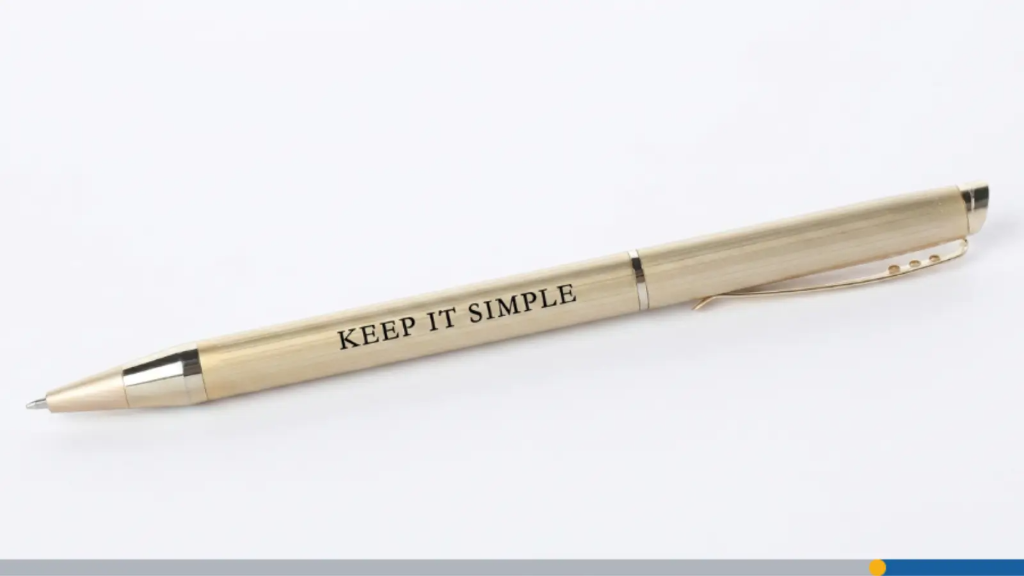
Classic low-cost swag still has a place. Pens are probably the most-used promotional item in existence, and for good reason: everyone needs one, and they travel constantly from one person’s desk to another.
Buttons and pins work well for events where people want a small, wearable keepsake. These items are cost-effective at scale and easy to produce quickly.
The key with Tier 1 swag is design quality. Even a cheap pen looks good with clean branding. Don’t cut corners on the print; it’s what separates forgettable from functional.
Consider using Free Logo Services to refine your logo before printing on swag. A crisp, expandable logo makes even budget items look polished.
When These Work (Mass Events, Conferences, Street Teams)
Tier 1 items shine when you need to hand out hundreds or thousands of pieces. Trade shows and conferences are the obvious fit. You’re meeting a lot of people, and most of them will forget your name by day two without something tangible.
These items also work for college recruiting events, community sponsorships, and local marketing. Think about any place where you need broad reach on a tight budget; that’s where Tier 1 delivers.
A quick note on sustainability: Even at the low end, there are now more eco-friendly alternatives. Recycled paper notepads, soy-ink pens, and biodegradable sticker materials all exist at competitive price points.
“One does not accumulate but eliminate. It is not daily increase but daily decrease. The height of cultivation always runs to simplicity.” [2]
Bruce Lee, Tao of Jeet Kune Do, 1975.
How to Keep Them On-Brand Without Overcomplicating Design
Less is more with small promotional items. A logo, a tagline, and a URL are often plenty. Trying to cram in too much information makes the item look cluttered and cheap.
- Stick to your brand’s core colors. If your palette has three colors, you probably only need two on a pen.
- Match your font exactly; don’t let a vendor substitute something else.
- Consider printing on one side only, especially for smaller items. White space reads as confidence and intentionality, not laziness.
- Your logo doesn’t need to be enormous to be noticeable.
- If you don’t have a production-ready logo, sort that out before ordering anything. A pixelated or stretched logo is worse than no logo at all.
- Get a clean vector file and protect it carefully.
Tier 2: Mid-Range Swag People Actually Use
This is where swag starts getting genuinely useful. Tier 2 items sit in the $10 to $40 range and are the ones people actually keep, use, and show off. Done well, they’re the backbone of any swag program.
The return on mid-range swag is often better than premium items because they’re used so consistently. Every day visibility adds up.
Tote Bags, Mugs, Tumblers, T-Shirts, Mousepads, Notebooks
These are the workhorses. Tote bags have become almost ubiquitous, but a well-designed one still gets used. The bag needs to be sturdy, not the cheap, floppy kind that tears after two uses.
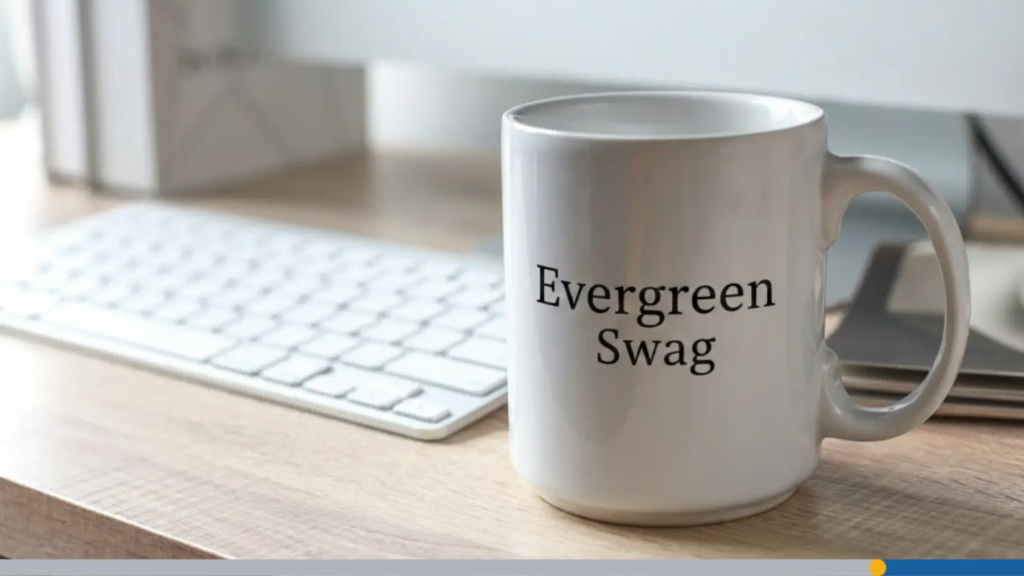
Branded mugs and tumblers are consistently popular. People use them every day, and they end up in offices, homes, and commutes. A quality tumbler with a clean logo is genuinely appreciated.
T-shirts are a classic for good reason, but fit matters enormously. If your shirt fits badly or feels cheap, it goes straight to the donation pile. Invest a little more; it’s worth it.
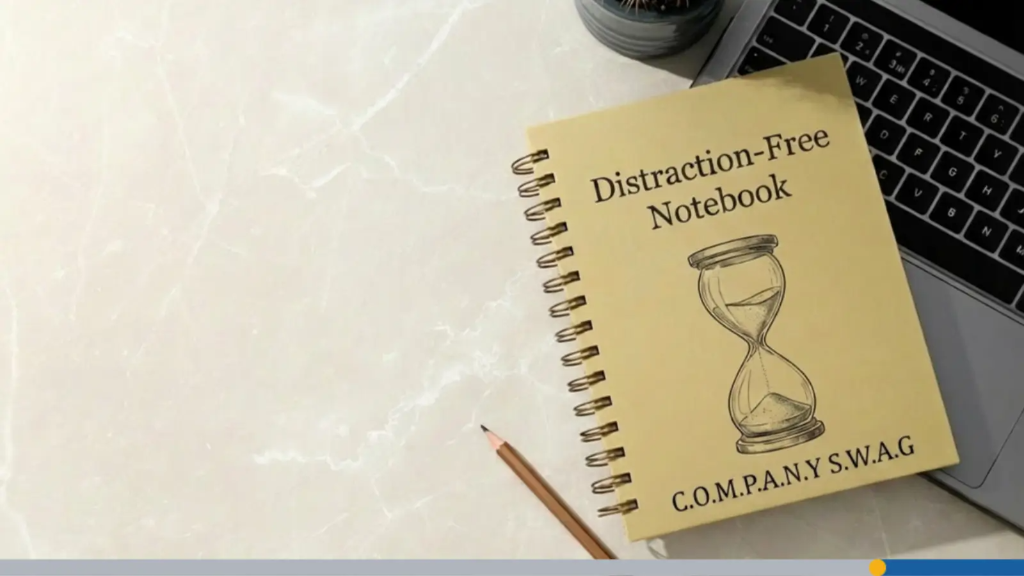
Mousepads and notebooks are solid choices for office-centric audiences. A quality notebook with a ribbon marker and your logo on the cover feels like a real gift, not a freebie.
Ideas for Employees vs. Customers vs. Partners
The same item can feel very different depending on who gets it. For employees, swag signals belonging. A well-made hoodie or a custom desk kit announces you’re part of something. It’s morale-building as much as branding.
For customers, swag conveys thank you and reinforces their decision to use your services again. It should feel like a bonus, not marketing material. The less it screams advertisement, the better they’ll feel about it.
For partners and agencies, swag is a signal of a relationship. It tells them you value the partnership. A curated gift with a handwritten note goes further than a generic branded item in a plastic bag.
Segment your swag budget accordingly. Your top 20 clients shouldn’t get the same item as a conference attendee. Differentiate deliberately, and people will notice.
Designing Evergreen Swag vs. Campaign-Specific Swag
Evergreen swag uses your core brand identity and has no expiration date. A classic logo tote bag can be reordered year after year. Campaign swag is tied to a launch, a season, or a theme.
Both have value, but they serve different purposes. Evergreen items are the foundation of your swag program; consistent, reusable, and reliable. They reduce decision fatigue and simplify reordering.
Campaign-specific swag generates excitement and urgency. A limited-edition mug tied to a product launch creates buzz. A holiday-themed tote for a seasonal sale feels timely and fun.
The risk with campaign swag is leftover inventory. Order conservatively for campaigns and more generously for evergreen items. You’ll thank yourself when the campaign ends, and you’re not left with 400 unsold mugs.
Tier 3: Premium Gifts for VIPs and Clients
Premium swag is about making someone feel genuinely valued. These aren’t trinkets; they’re gifts. The bar for quality, packaging, and personalization goes way up.
This tier is reserved for specific people at specific moments. Spending thoughtlessly at this level is expensive and not strategic.
Bundled Gift Sets, Higher-End Drinkware, Apparel, Desk Items
A bundled gift set is one of the most effective premium swag formats. A curated box with complementary items (say, a leather notebook, a quality pen, and a ceramic mug) feels cohesive and considered.
Brands like Yeti and Stanley dominate the high-end drinkware space for a reason. Their products are genuinely good, and people know it. Gifting a recognizable premium brand alongside your logo elevates your image by association.
For apparel, think quality over quantity. A Patagonia vest or a well-made quarter-zip with a subtle embroidered logo gets worn and remembered. Flashy logos on a budget fleece do the opposite.
Desk items, like a wireless charging pad, a premium mousepad, or a nice cable organizer, are practical and visible. They sit on someone’s desk every day, working hard for your brand.
Personalized vs. Just Branded
There’s a meaningful difference between branded and personalized swag. Branded means your logo is on it. Personalized means the recipient’s name, initials, or something meaningful to them is included.
- Personalization dramatically increases perceived value. A notebook embossed with someone’s name feels like a gift, not marketing collateral. The extra cost is often minimal, but the emotional impact is remarkable.
- You don’t have to personalize everything, but for VIP clients or top performers, it’s worth the effort. Even a handwritten card inside a standard gift box adds a human touch that people remember.
- Here’s a practical tip: Build a list of your top clients, employees, or partners before the holidays. Collect their names and preferences in advance. Last-minute personalization is stressful and expensive.
Free Logo Services offers logo files in multiple formats, which is handy when working with embroidery or engraving vendors who need specific file types.
Timing: Onboarding, Milestones, Holidays
Timing a premium gift well is half the battle. The three best moments are onboarding, milestones, and holidays. Each one has a different emotional register.
Onboarding gifts welcome someone into your world, whether they’re a new client, employee, or partner. A polished welcome kit during onboarding sets a tone that’s hard to replicate later.
Milestone gifts celebrate achievements: one year as a client, a major contract renewal, a work anniversary. They say, “We noticed, and we’re grateful.” That matters more than most people admit.
Holiday gifts are expected but still effective when done with care. The mistake most companies make is sending everything in December when everyone else does. Consider a happy new year gift in January to make it a better attention grabber.

Aligning Swag With Your Brand Personality
Swag is a brand expression. It tells people something about who you are. A minimalist fintech company and a playful consumer app should not be sending the same items. Your swag should feel like you.
This is the section where brand voice becomes tangible. What does your brand’s personality look, feel, and function like as a physical object?
Fun and Playful vs. Minimal and Professional
If your brand is fun and bold, lean into it. Bright colors, irreverent taglines, and unexpected formats (like a branded deck of cards or a custom puzzle) match a playful brand voice perfectly.
- If your brand is minimal and professional, your swag should reflect that. Clean design, neutral tones, and quality materials say more than a busy logo on a bright mug can.
- The trap is mixing signals. A law firm sending neon stress balls feels off. A gaming company sending plain black pens feels boring. Match the swag to the vibe, and it resonates.
- Think about the words people use to describe your brand in reviews or social mentions. Those descriptors are a cheat sheet for swag tone. Funny, bold, sophisticated, and approachable; these all translate into product choices.
Eco-Friendly and Sustainable Options
Sustainability isn’t just a trend; it’s increasingly a baseline expectation. Customers and employees pay attention to whether the brands they support are making responsible choices.
There are genuinely good eco-friendly swag choices now. Recycled-material totes, bamboo pens, organic cotton t-shirts, seed paper cards, and compostable packaging are all available at competitive prices.
More importantly, sustainable swag aligns with the values of a flourishing segment of consumers. If your brand leans into sustainability, your swag should too. Incongruence between your message and your materials is a credibility problem.
Even if sustainability isn’t a core brand pillar, eliminating the most wasteful and disposable items from your swag program is a small, visible step in the right direction. People notice.
Swag Ideas for Service Businesses vs. Product Brands
Service businesses (agencies, consultants, SaaS companies) and product brands have different swag needs. Service brands often lack the physical product touchpoints that goods companies have, making swag one of the few material expressions of their brand.
- For service businesses, swag that reinforces credibility works best: quality notebooks, polished desk items, and sophisticated apparel. The items should feel as professional as the service itself.
- Product brands can afford to be more playful and creative with swag, especially when the items connect to the product category. A food brand sending a custom kitchen tool is on-brand in a way a branded pen isn’t.
- The goal for both is the same: Make the swag feel like a natural extension of the experience. If someone uses your product and then receives swag that feels consistent with that experience, the brand impression compounds.
How to Avoid Common Swag Mistakes
Even well-intentioned swag programs go wrong. The mistakes are often predictable, which means they’re also avoidable. Here’s what to watch out for before you place a big order.
Picking Trendy but Impractical Items
Every year, there’s a swag trend: fidget spinners, PopSockets, branded masks. Some of these have real utility; many don’t survive past the initial buzz. Trend-chasing is expensive and often dates your brand quickly.
The test for any swag item is simple: Will the recipient actually use this item six months from now? If the answer is uncertain, pass. A cheaper, boring item that gets used beats an exciting novelty that gets tossed.
Practically, this means leaning toward perennial categories: drinkware, writing tools, apparel, bags, and tech accessories. These don’t go out of style because they fill genuine everyday needs.
That said, don’t be afraid to experiment with a small batch of a new item. Test it with a small group before committing to a large order. The cost of a test run is always lower than the cost of a bad bulk order.
Overbranding Everything (Logo Overload)
Nothing says “we don’t trust our own brand” like a logo repeated six times across a single item. Overbranding is the most common swag mistake, and it actively makes items less wearable and less desirable.
A single, well-placed logo on quality material outperforms a giant logo on cheap material every time. People will wear a subtle Patagonia vest with a small embroidered logo. They won’t wear a billboard t-shirt with your logo covering the chest.
The same logic applies to swag sets. Not every item in a bundle needs your logo. Sometimes, including a co-branded or unbranded premium item elevates the whole set and makes the branded items feel more special by comparison.
Think about how your favorite brands handle product design. Apple doesn’t plaster its logo on every surface. Subtlety reads as confidence. Trust your brand enough to let a small mark do the work.
Ignoring Shipping, Storage, and Sizes
Logistics are the unglamorous side of swag, but they derail more programs than bad design does. Heavy items cost a lot to ship. Fragile items break in transit. Large items need warehouse space you may not have.
Think about weight and dimensions before ordering. A nice ceramic mug is lovely in person, but becomes an expensive problem when you’re shipping 500 of them internationally. Tumblers with lids, foam-padded kits, and lightweight apparel travel much better.
Storage is worth planning, too. Where are these items going to live before they’re distributed? If your office has no storage, fulfillment services like Printfection or SwagUp handle storage and shipping for you, which is worth the cost for larger programs.

Building a Simple Swag Plan for the Year
Ad hoc swag ordering is stressful and wasteful. A simple annual plan keeps you ahead of deadlines, on budget, and consistent with your brand strategy throughout the year.
You don’t need a complex project management system. A spreadsheet and a calendar are enough to build a solid swag plan.
Key Moments to Plan for (Events, Launches, Holidays)
Start by mapping out your calendar anchors: trade shows, product launches, company milestones, and seasonal moments. Each one is a potential swag moment. Not all of them warrant a new item, but all of them are worth evaluating.
Here’s a rough framework for the year:
- Q1: New year welcome kits for clients, employee recognition gifts.
- Q2: Conference season swag, Earth Day eco-friendly sends.
- Q3: Mid-year loyalty gifts, summer event giveaways.
- Q4: Holiday gifts, year-end client appreciation, team swag.
Plan orders six to eight weeks ahead of when you need them. Rush orders are expensive and stressful. Eco-friendly or highly customized items may take even longer.
If you’re launching a new product or campaign, coordinate your swag with the launch date. A well-timed gift that lands in someone’s inbox alongside a product announcement reinforces both messages simultaneously.
If you’re finalizing your brand identity ahead of a swag order, Free Logo Services is a solid resource for logo creation and file preparation before production begins.
Swag Checklist and Budget Template
Use this checklist before placing any swag order to make sure you’re covered on the fundamentals:
- Goal defined (awareness, loyalty, revenue, or recognition).
- Audience identified and segmented.
- Budget allocated per tier (Tier 1/2/3).
- Items selected based on audience context.
- Logo file ready in vector format (AI, EPS, or SVG).
- Colors confirmed in CMYK and PMS for accurate printing.
- Quantities confirmed with a buffer for extras.
- Shipping method and lead time verified.
- Storage plan confirmed or fulfillment partner engaged.
- Personalization (if any) confirmed and proofed.
For budgeting, a simple three-tier split works well for most companies:
- Tier 1 (mass events): $1 to $5 per item, large quantities.
- Tier 2 (customers and employees): $10 to $40 per item, moderate quantities.
- Tier 3 (VIPs and clients): $50 to $150+ per item, small, targeted quantities.
Adjust based on your industry, company size, and goals. A software startup running a product launch will have a very different budget than an enterprise company gifting 50 top clients.
The last thing to remember: Swag is a long game. The brands that do it well aren’t the ones that spend the most; they’re the ones that stay consistent, stay on-brand, and keep showing up. Build your plan, stick to your strategy, and let the compounding do its work.
Ready to nail your brand identity before your next swag order? Free Logo Services is a great starting point for getting your logo ready for production. Why not try our AI-Powered logo maker?
Bibliography
- Neumeier, M. 2006. The Brand Gap: How to Bridge the Distance Between Business Strategy and Design. 2nd Edition. Indianapolis, Indiana: New Riders.
- Lee, B. 2011. Tao of Jeet Kune Do: New Expanded Edition. Expanded edition. Los Angeles, California: Black Belt Books.